


Your cart is empty, and it looks like you haven’t added anything yet.
 Medicines
 Healthcare Devices
 Supplements
 Beauty
 Baby & Mom Care
 Sexual Wellness
 Personal Care
 Home Care
 Food & Nutrition

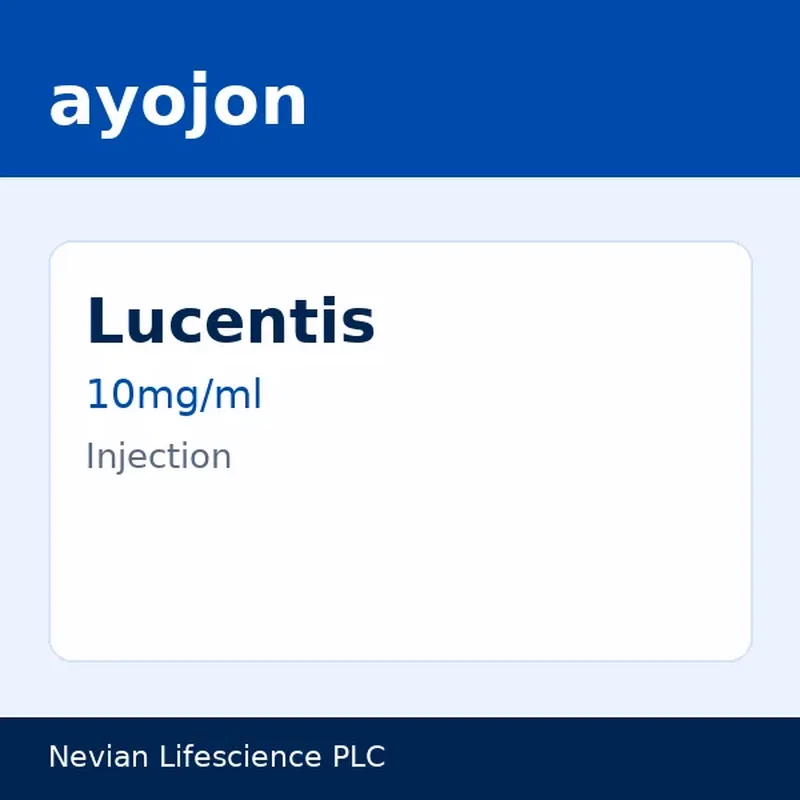
Pack size: 1 0.3ml (3.0mg) vial | Price is for the whole 0.3ml (3.0mg) vial
⚠ Prescription required. This medicine may only be dispensed against a valid prescription.
Generic: Ranibizumab
Form: Injection 10mg/ml
Wet ARMD, Central retinal vein occlusion, Diabetic macular edema
Intravitreal Neovascular (wet) age-related macular degeneration Adult: 0.5 mg (0.05 mL of 10 mg/mL) mthly into the affected eye as a single dose. Continue treatment until visual acuity is stable for 3 consecutive mth. Doses are given at intervals of at least 1 mth. Macular oedema secondary to retinal vein occlusion Adult: 0.5 mg mthly into the affected eye as a single dose for 6 months. Doses are given at intervals of at least 1 mth. Diabetic Macular Edema, Diabetic Retinopathy with DME 0.3 mg (0.05 mL of 6 mg/mL) administer by intravitreal injection once a month (approximately every 28 days).
Active or suspected ocular or periocular infection, active severe intraocular inflammation, signs of irreversible ischaemic visual function loss in patients w/ retinal vein occlusion.
Humanized monoclonal antibody to VEGF-A, inhibits VEGF-A-induced ocular neovascularization.
Patient w/ risk factors for retinal pigment epithelial tears, history of stroke or transient ischaemic attack, uncontrolled HTN, previous intravitreal inj, active systemic infections, proliferative diabetic retinopathy, diabetic macular oedema due to type 1 DM. Discontinue treatment if rhegmatogenous retinal detachment or stage 3 or 4 macular hole develops. Diabetic patients w/ glycosylated Hb over 12%. Lactation: Unknown if distributed in milk; use caution
>10% Conjunctival hemorrhage (43-77%),Eye pain (17-37%),Vitreous floaters (3-32%),Incr IOP (8-24%),Vitreous detachment (7-22%),Eye irritation (4-19%),Intraocular inflammation (5-18%),Headache (2-15%),Upper resp tract infection (2-15%),Retinal disorder (13%),Blepharitis (3-13%),Retinal degeneration (1-11%) 1-10% Conjunctival hyperemia (9%),Posterior capsule opacification (8%),Injection site hemorrhage (5%),Vitreous hemorrhage (4%)
__NAME__ is used for the treatment of eye diseases which are caused by diabetes, macular degeneration, and macular swelling. It reduces the abnormal growth and leakage of blood vessels in the eye that can cause vision loss. __NAME__ is administered directly into the eyeball by an eye specialist. You should not self administer this medicine at home. The common side effects include eye pain, redness, blurred or decreased vision and eye discharge. However, if you experience these side effects for a longer duration or any other symptoms which you think may be due to this medicine, please inform your doctor. It is not advised to drive after administration of this injection as it may cause blurring of vision.
{'list': ['Diabetic eye disease', 'Wet age-related macular degeneration', 'Macular oedema due to retinal vein occlusion']}
{'tag': 'Common', 'list': ['Conjunctival hemorrhage', 'Eye pain', 'Eye inflammation', 'Increased intraocular pressure']}
Your doctor or nurse will give you this medicine. Kindly do not self administer.
__NAME__ is an anti-angiogenic medication. It works by blocking a protein called vascular endothelial growth factor (VEGF). This stops the growth and leakage of abnormal blood vessels in the eye(s) that may cause vision loss.
If you miss a dose of __NAME__, please consult your doctor.
It is not known whether it is safe to consume alcohol with __NAME__. Please consult your doctor.
__NAME__ may be unsafe to use during pregnancy. Although there are limited studies in humans, animal studies have shown harmful effects on the developing baby. Your doctor will weigh the benefits and any potential risks before prescribing it to you. Please consult your doctor.
__NAME__ is probably safe to use during breastfeeding. Limited human data suggests that the drug does not represent any significant risk to the baby.
__NAME__ may cause blurring of your vision for a short time just after its use. Do not drive until your vision is clear.
__NAME__ is probably safe to use in patients with kidney disease. Limited data available suggests that dose adjustment of __NAME__ may not be needed in these patients. Please consult your doctor.
__NAME__ is probably safe to use in patients with liver disease. Limited data available suggests that dose adjustment of __NAME__ may not be needed in these patients. Please consult your doctor.

No review given yet!
 Fast delivery across our Dhaka service areas
 Safe Payment
 7 Days Return Policy
 Sourced from licensed pharmacies


You need to Sign in to view this feature

This address will be removed from this list
 english