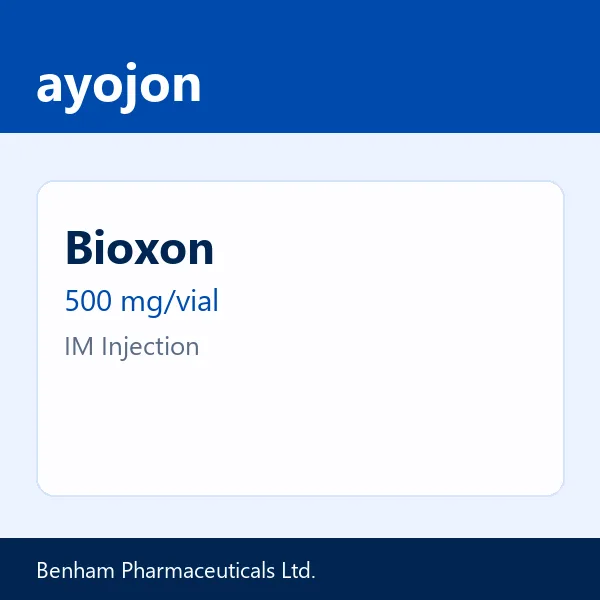



Generic: Ceftriaxone Sodium | Dosage Form: IM Injection | Manufacturer: Benham Pharmaceuticals Ltd.
Indications
Ceftriaxone injection is indicated for the treatment of the following major infections:
- Lower respiratory tract infections
- Acute Bacterial Otitis Media
- Skin and skin structure infections
- Urinary tract infections
- Gonorrhea
- Bacterial Septicemia
- Bone and joint infections
- Meningitis
- Prevention of postoperative infections
- Perioperative prophylaxis of infections associated with surgery
Dosage & Administration
Adult: The usual dose is 1 to 2 gm by intravenous or intramuscular administration once a day (or in equally divided doses twice a day).
- Pneumonia, Bronchitis, Acute bacterial otitis media, Skin and skin structure infection, Urinary tract infections, Bacterial Septicemia, Bone and joint infections, Meningitis: 1 to 2 g IV or IM once a day (or in equally divided doses twice a day); Maximum dose: 4 gm/day
- Uncomplicated gonococcal infections: 250 mg IM as a single dose
- Surgical prophylaxis: 1 g IV as a single dose 30 to 120 minutes before surgery
Infants and Children (01 month or older): The usual dose is 50 to 75 mg/kg intravenous or intramuscular administration once a day (or in equally divided doses twice a day).
- Pneumonia, Bronchitis, Skin and skin structure infection, Urinary tract infections, Bacterial Septicemia, Bone and joint infections: 50 to 75 mg/kg IV or IM once a day (or in equally divided doses twice a day); Maximum dose: 2 gm/day
- Acute bacterial otitis media: 50 mg/kg IM in single dose; Maximum dose: 1 gm/day
- Meningitis: 100 mg/kg IV or IM in single daily dose or (or in equally divided doses twice a day); Maximum dose: 4 gm/day
Duration of therapy: Continue for more than 2 days after signs and symptoms of infection have disappeared. Usual duration is 4 to 14 days; in complicated infections, longer therapy may be required.
Interaction
No drug interactions have been reported.
Contraindications
Ceftriaxone should not be given to patients with a history of hypersensitivity to cephalosporin antibiotics.
Side Effects
Ceftriaxone is generally well tolerated. A few side effects such as gastro-intestinal effects including diarrhea, nausea and vomiting, stomatitis and glossitis; cutaneous reactions including rash, pruritus, urticaria, edema and erythema multiforme; hematologic reactions including eosinophilia, thrombocytopenia, leucopenia, anemia and neutropenia; hepatic reactions including elevations of SGOT or SGPT, bilirubinemia; CNS reactions including nervousness, confusion, sleep disturbances, headache, hyperactivity, convulsion, hypertonia and dizziness were reported. Local phlebitis occurs rarely following intravenous administration but can be minimized by slow injections over 2-4 minutes.
Precautions & Warnings
As with other cephalosporins, anaphylactic shock cannot be ruled out even if a thorough patient history is taken. Anaphylactic shock requires immediate countermeasures such as intravenous epinephrine followed by a glucocorticoid. In rare cases, shadows suggesting sludge have been detected by sonograms of the gallbladder. This condition was reversible on discontinuation or completion of Ceftriaxone therapy. Even if such findings are associated with pain, conservative, nonsurgical management is recommended. During prolonged treatment the blood picture should be checked at regular intervals.
Overdose Effects
There is no specific antidote. Treatment of overdosage should be symptomatic.
Therapeutic Class
Third generation cephalosporins
Storage Conditions
Vial store in a cool, dry place (below 30° C), away from light & moisture. Keep out of the reach of children.