


Your cart is empty, and it looks like you haven’t added anything yet.
 Medicines
 Healthcare Devices
 Supplements
 Beauty
 Baby & Mom Care
 Sexual Wellness
 Personal Care
 Home Care
 Food & Nutrition

Pack size: 1 Tablet | Price is for the whole Tablet
⚠ Prescription required. This medicine may only be dispensed against a valid prescription.
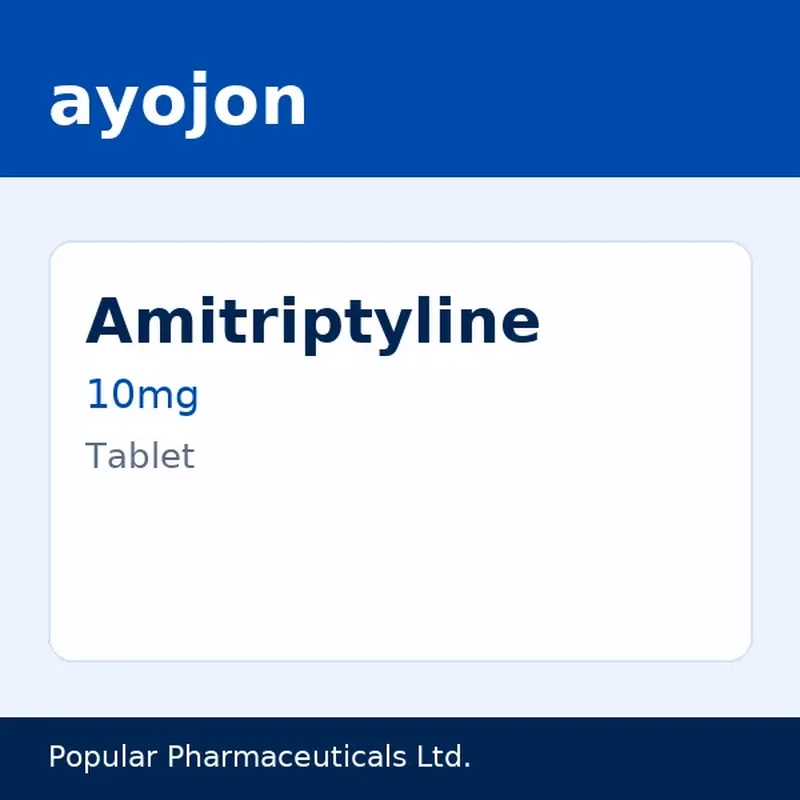
Generic: Amitriptyline Hydrochloride
Form: Tablet 10mg
Adult: PO Depression Initial:50-75 mg/day; up to 150 mg/day if needed. Max: 300 mg/day in severe cases. Neuropathic pain Initial: 10-25 mg/day at night, up to 75 mg/day if needed. Migraine prophylaxis Initial: 10 mg/day at night. Maintenance: 50-75 mg/day at night. Elderly: Initially, 25-50 mg/day as a single dose (at bedtime) or in divided doses.
Increased risk of serotonin syndrome w/ SSRIs, TCAs, triptans, fentanyl, lithium, tramadol. May reduce plasma levels w/ barbiturates, rifampicin and other anticonvulsants. May increase plasma levels w/ methylphenidate, cimetidine, antipsychotics, Ca channel blockers. May precipitate cardiac arrhythmias w/ thyroid hormones. May reduce antihypertensive effects of debrisoquine, guanethidine and clonidine. May increase pressor effect of epinephrine and norepinephrine. May increase the risk of ventricular arrhythmias w/ antiarrhythmics (e.g. amiodarone or quinidine), antihistamines astemizole, terfenadine, some antipsychotics (pimozide, sertindole, and thioridazine), sotalol, cisapride and halofantrine. Potentially Fatal: Increased risk of serotonin syndrome w/ MAOIs, linezolid and methylene blue.
Bipolar illness, pregnancy, lactation elderly, CVS disease, renal or liver impairment, epilepsy, thyroid dysfunction, DM. Avoid abrupt withdrawal; urinary retention, prostatic hyperplasia; chronic constipation; angle-closure glaucoma; phaeochromocytoma. Monitor for signs of clinical worsening, suicidality or behavioural changes. May increase risks associated with electro-convulsive therapy. May affect ability to drive or operate machinery. Lactation: Distributed in breast milk; do not nurse (AAP states effect on nursing infants is unknown but may be of concern)
Amitriptyline is a dibenzocycloheptadiene tricyclic antidepressant. It increases synaptic concentration of serotonin and/or norepinephrine in the CNS by blocking the neuronal reuptake of norepinephrine and serotonin.
PO Depression Child: Adolescent: Initially, 25-50 mg/day as a single dose (at bedtime) or in divided doses. Nocturnal enuresis Child: 6-10 yr 10-20 mg/day; 11-16 yr 25-50 mg/day. All doses to be given at bedtime. Max duration: 3 mth.
May be taken with or without food.
$4a
{'list': ['Depression', 'Neuropathic pain', 'Migraine']}
{'tag': 'Common', 'list': ['Constipation', 'Difficulty in urination', 'Dryness in mouth', 'Increased heart rate', 'Orthostatic hypotension (sudden lowering of blood pressure on standing)', 'Weight gain', 'Aggressive behavior', 'Agitation', 'Nasal congestion (stuffy nose)']}
Take this medicine in the dose and duration as advised by your doctor. Swallow it as a whole. Do not chew, crush or break it. __NAME__ may be taken with or without food, but it is better to take it at a fixed time.
__NAME__ is a tricyclic antidepressant. It works by increasing the levels of chemical messengers in the brain that help in regulating mood and treat depression. It also stops the transmission of pain signals from nerves to the brain thereby relieving neuropathic pain (pain from damaged nerves).
If you miss a dose of __NAME__, take it as soon as possible. However, if it is almost time for your next dose, skip the missed dose and go back to your regular schedule. Do not double the dose.
It is unsafe to consume alcohol with __NAME__.
__NAME__ may be unsafe to use during pregnancy. Although there are limited studies in humans, animal studies have shown harmful effects on the developing baby. Your doctor will weigh the benefits and any potential risks before prescribing it to you. Please consult your doctor.
__NAME__ is probably unsafe to use during breastfeeding. Limited human data suggests that the drug may pass into the breastmilk and harm the baby.
__NAME__ may cause side effects which could affect your ability to drive. __NAME__ may impair your alertness which may affect your ability to drive.
__NAME__ is probably safe to use in patients with kidney disease. Limited data available suggests that dose adjustment of __NAME__ may not be needed in these patients. Please consult your doctor.
__NAME__ should be used with caution in patients with liver disease. Dose adjustment of __NAME__ may be needed. Please consult your doctor. Use of __NAME__ is not recommended in patients with severe liver disease.

No review given yet!
 Fast delivery across our Dhaka service areas
 Safe Payment
 7 Days Return Policy
 Sourced from licensed pharmacies




You need to Sign in to view this feature

This address will be removed from this list
 english